Security Assessment of Software Protection in Diagnostic Tools
Assessing protection layers in automotive diagnostic software using x32dbg and anti-tamper analysis.
Project Overview
Defensive Analysis of the Protection of ECU Programming Tools: This research focuses on the technical evaluation of the software-protection mechanisms implemented in automotive diagnostic tools, specifically a commercial ECU programming tool, as research and development through lawful, authorised corporate and personal processes. The project analyzes how these tools defend against reverse engineering and unauthorized tampering, and what a stronger design would look like. It reports protection categories only; no bypass methods, patches or cracked software are published.
Security Mechanisms Evaluated
1. Virtual Functions & V-Table Obfuscation
The application utilizes complex Virtual Functions to decouple the logic from the binary’s static structure. By obfuscating the vtable, the software makes it significantly harder for static analysis tools to reconstruct the execution flow and call graphs.
2. Memory Integrity & VirtualProtect
A critical part of the analysis involved monitoring the Windows VirtualProtect API calls. This mechanism is used to dynamically change memory page permissions (e.g., flipping from PAGE_READWRITE to PAGE_EXECUTE_READ) to prevent code injection and live memory dumping during runtime.
3. Dynamic Analysis with x32dbg
Using x32dbg, I analysed how the software’s protection layers behave at runtime. By utilizing hardware breakpoints and tracing API calls, I observed how the software protects sensitive operations like communication with the hardware dongle, in order to assess the strength of those protections.
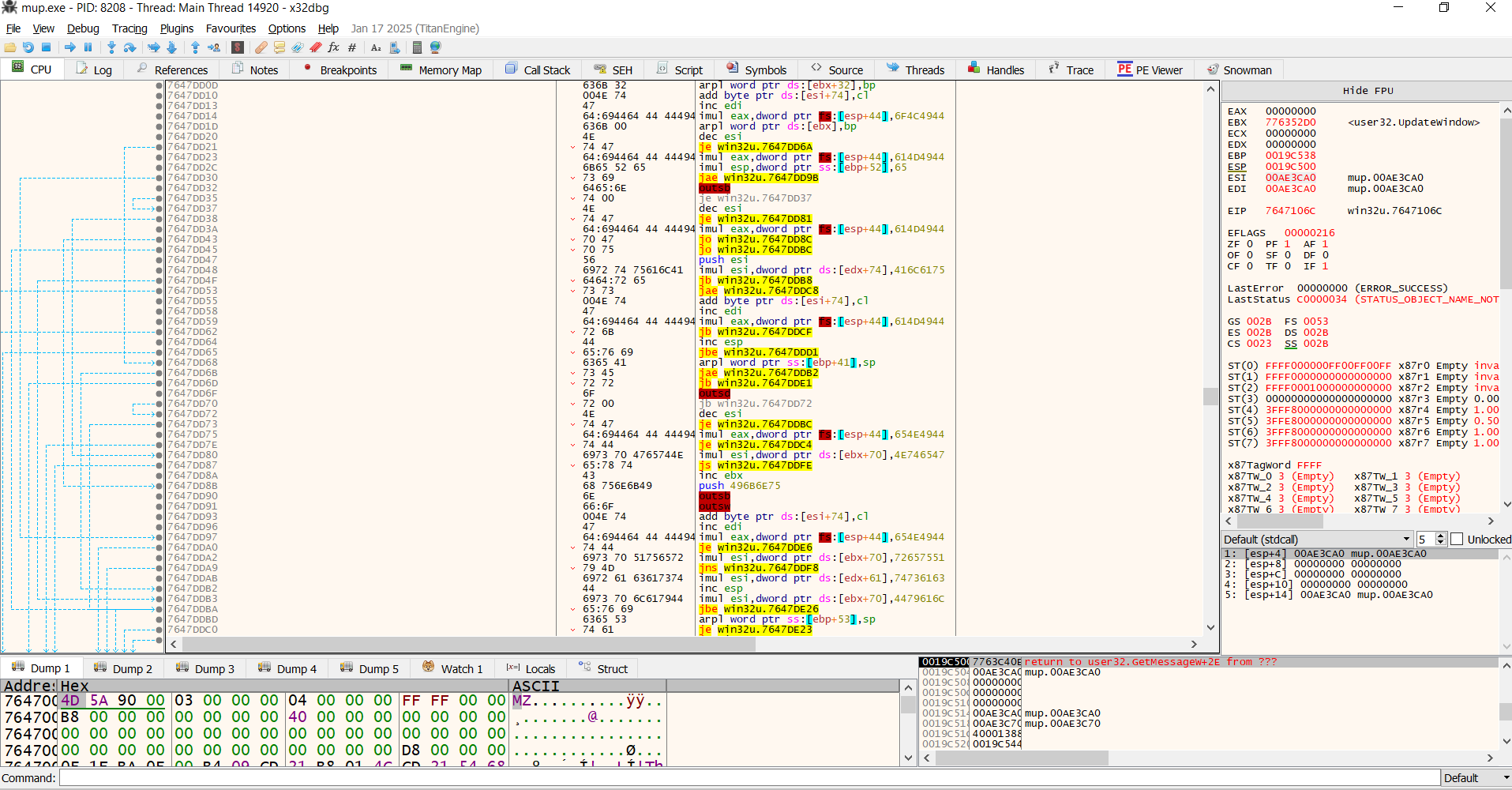
Technical Comparison
The following table summarizes the observed protection layers and their effectiveness against standard reverse engineering workflows:
| Protection Layer | Complexity | Analysis Tool | Observed Status |
|---|---|---|---|
| VirtualProtect | Medium | x32dbg | Active (Dynamic) |
| V-Table Hooking | High | Scylla / x32dbg | Identified |
| Anti-Debugging | Very High | ScyllaHide | Multiple Layers |
| Function Virtualization | High | x32dbg / IDA | Implemented |
Proposed Security Framework
To enhance the resilience of automotive diagnostic software, a multi-layered defense strategy is proposed. This includes implementing Polymorphic Code and Dynamic Integrity Verification to ensure that critical logic cannot be easily bypassed via patching.