Security Assessment of Diagnostic Scanner Ecosystems
Defensive assessment of the security posture of Android-based OBD2 scanners and their Bluetooth VCI communications.
Project Overview
This project is a defensive security assessment of aftermarket Android-based diagnostic scanner ecosystems, performed on a bench setup as research and development through lawful, authorised corporate and personal processes. These devices consist of an Android-based application communicating with a Smart VCI (Vehicle Communication Interface) via Bluetooth. The research focuses on understanding the communication protocol and evaluating what vehicle data and proprietary content is exposed, so that weaknesses can be reported and hardened. No credentials, keys, decrypted databases or bypass methods are published.
Attack Surface Analysis
The analysis is divided into three primary vectors to identify potential vulnerabilities:
1. Android Application Reverse Engineering
Many such tools run on a modified Android environment. By analysing the APK files, I reviewed how the software handles firmware updates for the VCI and how it protects its diagnostic databases.
- Tools Used: JADX-GUI, Frida.
- Focus: Strength of the protection around the update channel, subscription verification and local diagnostic databases, and how it could be hardened.
2. Bluetooth VCI Sniffing & Interception
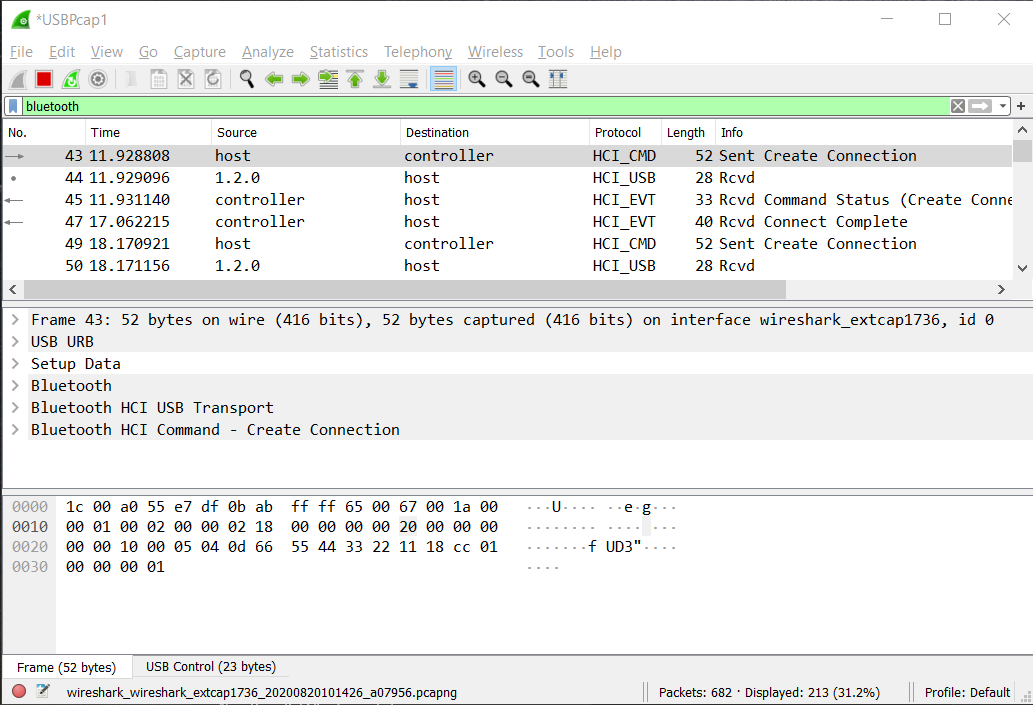
The communication between the tablet and the OBD2 connector is a critical point. Using Ubertooth One and Wireshark on test devices, I captured the traffic to identify how diagnostic commands (UDS/KWP2000) are encapsulated in Bluetooth packets.
3. Data Extraction & Firmware Analysis
Diagnostic tools often download “Car Brands” packages. This project reviews how these packages are protected in transit and at rest, and how the tool interprets specialized ECU responses that are not part of standard OBD-II.
Key Research Findings
| Vulnerability Area | Risk Level | Impact |
|---|---|---|
| BLE Pairing | High | Eavesdropping on vehicle data (fix: LE Secure Connections pairing) |
| Local Database | Medium | Exposure of proprietary diagnostic data (fix: stronger encryption and key handling) |
| APK Security | Medium | Weak integrity and license checks (fix: attestation and tamper detection) |
Workflow & Methodology
- Reconnaissance: Mapping the device’s hardware and identifying open ports.
- Traffic Analysis: Monitoring the handshake between the VCI and the ECU.
- Validation: Checking whether the VCI accepts unauthenticated or malformed diagnostic requests, to recommend access control on the link.