Advanced Reverse Engineering & Hardware Interfacing of a Multi-Core Automotive ECU
A defensive study of multi-core firmware architecture, SecurityAccess (UDS 0x27) robustness, and live CAN-Bus monitoring for ECU diagnostics.
Project Overview
This project is a defensive security assessment of the multi-core automotive ECU, carried out on a bench unit as research and development through lawful, authorised corporate and personal processes. By combining firmware reverse engineering with physical hardware interfacing, I mapped the internal logic of the controller, identified design weaknesses that a vendor would want to harden, and established a framework for live diagnostic monitoring. The goal is understanding and protection — no keys, algorithms, firmware images or exploit code are published on this page.
Firmware Reverse Engineering
1. Multi-core Architecture Analysis
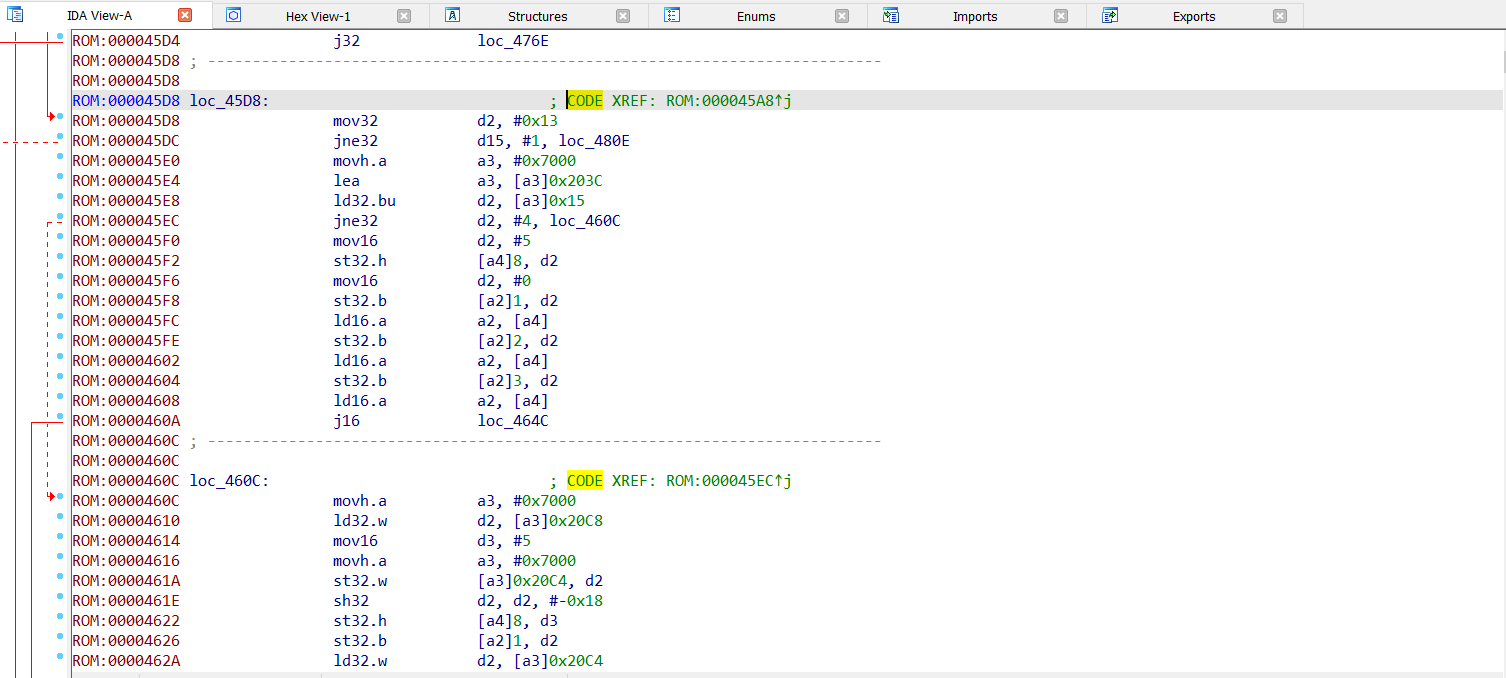
The ECU utilizes a high-performance multi-core processor (Core 0, 1, and 2). By analyzing references like in_CORE_ID, I mapped the distribution of tasks across cores, focusing on how the system balances real-time engine management with diagnostic interrupts.
2. Memory-Mapped I/O & Register Tracking
The analysis of decompiled C code revealed direct hardware interactions via memory-mapped addresses (e.g., DAT_f0036100). This enabled the identification of critical registers used for sensor acquisition and actuator triggering.
Hardware Interfacing & CAN Monitoring
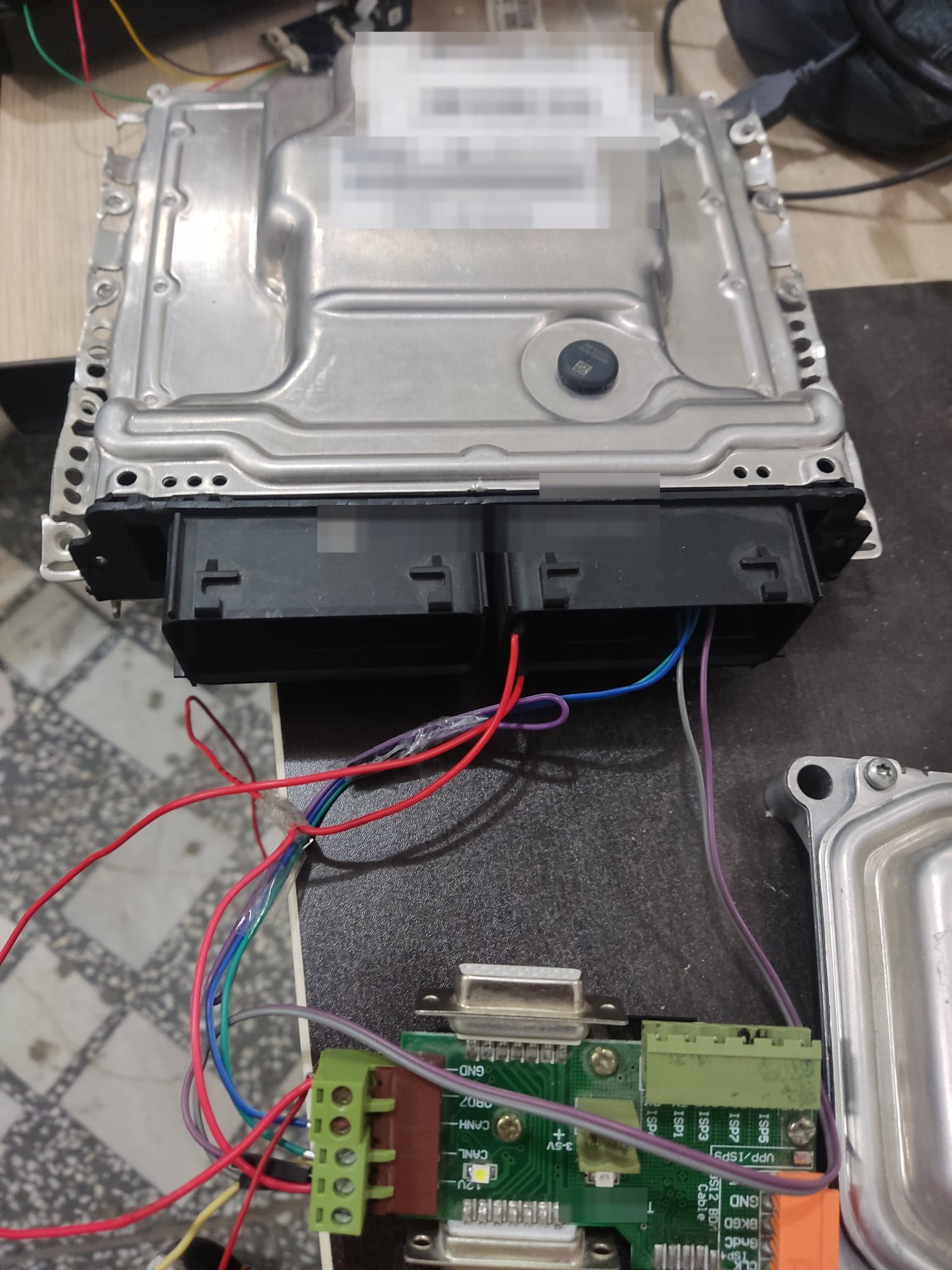
A key part of this project was the transition from static analysis to live verification. Using a specialized bench setup, I established a CAN-Bus connection to the ECU to monitor its operational behavior.
Live Diagnostic Monitoring
- Read/Write Operations: Intercepting data streams during flash memory operations to analyze the bootloader’s behavior.
- Protocol Analysis: Monitoring the UDS (Unified Diagnostic Services) stack to identify proprietary Service IDs (SIDs) and their corresponding response patterns.
- Functionality Verification: Using the bench setup to simulate vehicle states and observe how the decompiled logic reacts in a real-time hardware environment.
Security & Integrity Research
SecurityAccess Robustness Review (Service 0x27)
I studied the structure of the Seed/Key challenge-response in the firmware: the use of bitwise operations (XORs, shifts) and lookup tables, the quality of the seed, and the protections around it. The aim was to judge how well the mechanism resists misuse and to derive hardening recommendations (stronger seed entropy, a keyed cryptographic MAC instead of a fixed transformation, attempt limiting and lock-out delays). Details of the algorithm are deliberately not published.
Integrity & Checksum Analysis
The research also covered the ECU’s self-protection mechanisms. I identified and analyzed the routines (such as custom CRC-32 routines like FUN_000044c0) responsible for verifying firmware integrity, in order to evaluate how well the ECU protects itself against unintended or malicious modification of its calibration.
Key Accomplishments
- Architecture Mapping: Full analysis of multi-core load balancing.
- Security Assessment: Evaluated the SecurityAccess (Service 0x27) design and derived hardening recommendations.
- Hardware Setup: Bench acquisition of the firmware image for static analysis and live CAN monitoring.
- Integrity Analysis: Identification of firmware validation and Checksum routines.